
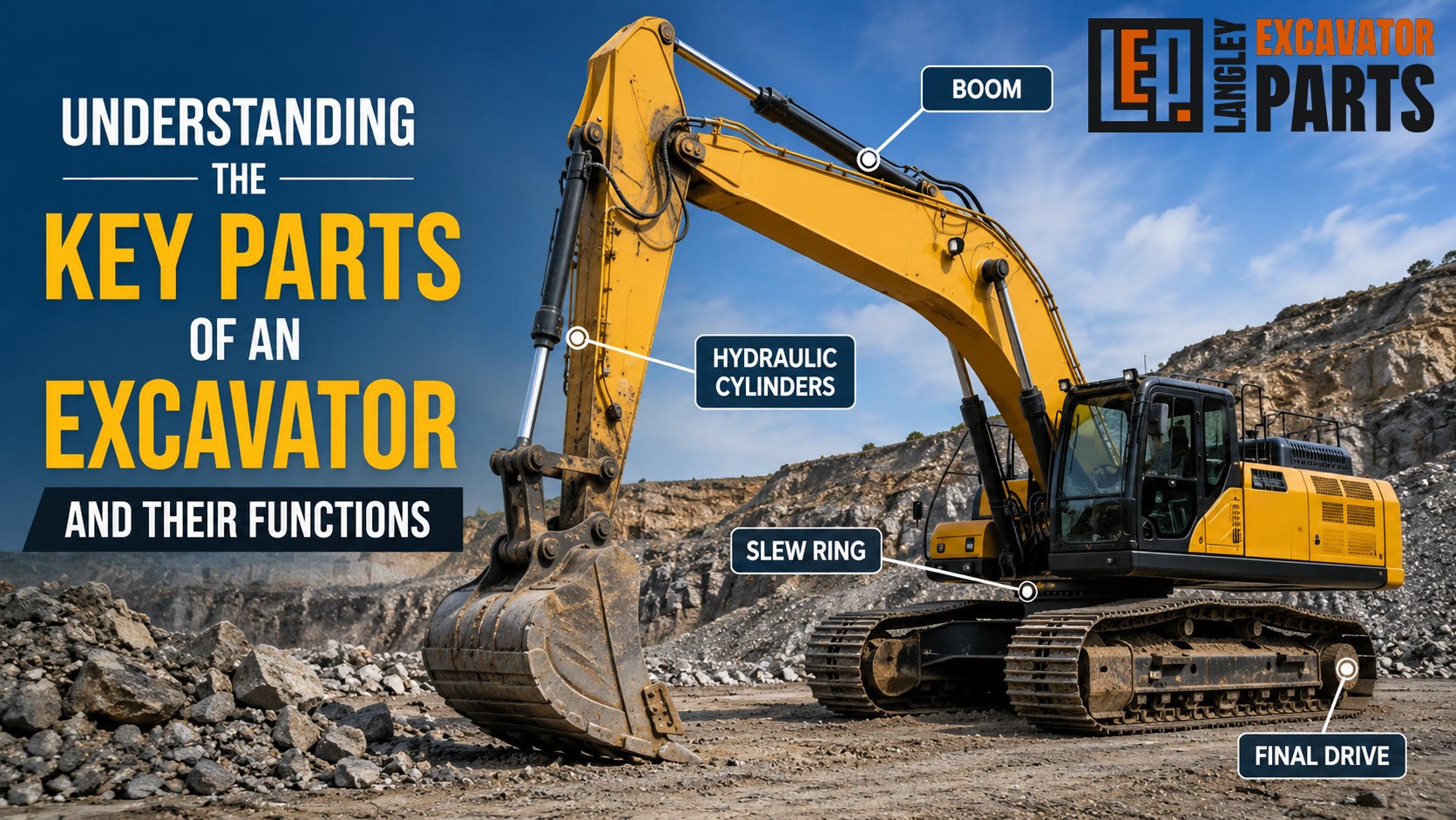
Excavators are among the most versatile and indispensable machines on any job site. Whether you’re digging foundations, clearing land, demolishing structures, managing forestry operations, or moving massive quantities of earth, a well-maintained excavator is the engine of productivity. These machines work harder than almost any other piece of equipment on a construction site, and that means every component inside them is put under constant stress.
What makes an excavator work isn’t just one system; it’s a sophisticated network of hydraulic circuits, mechanical linkages, electronic controls, and wear components all operating in concert. When even one part begins to fail, the entire machine’s performance, safety, and efficiency can be compromised.
That’s why using genuine excavator parts and quality excavator parts isn’t just a preference; it’s a practical necessity. Installing the wrong component or a low-quality substitute can create cascading issues, leading to costly breakdowns, dangerous operating conditions, and unnecessary downtime.
At Langley Excavator Parts Inc., we understand what’s at stake when your machine goes down. We help excavator owners, operators, and fleet managers source dependable OEM excavator parts and excavator replacement parts for leading brands, including Hitachi, John Deere, Caterpillar, Volvo, and Link-Belt. Our mission is to keep your machine running safely and efficiently because downtime isn’t just an inconvenience, it’s a direct hit to your bottom line.
Main Excavator Parts and Their Functions
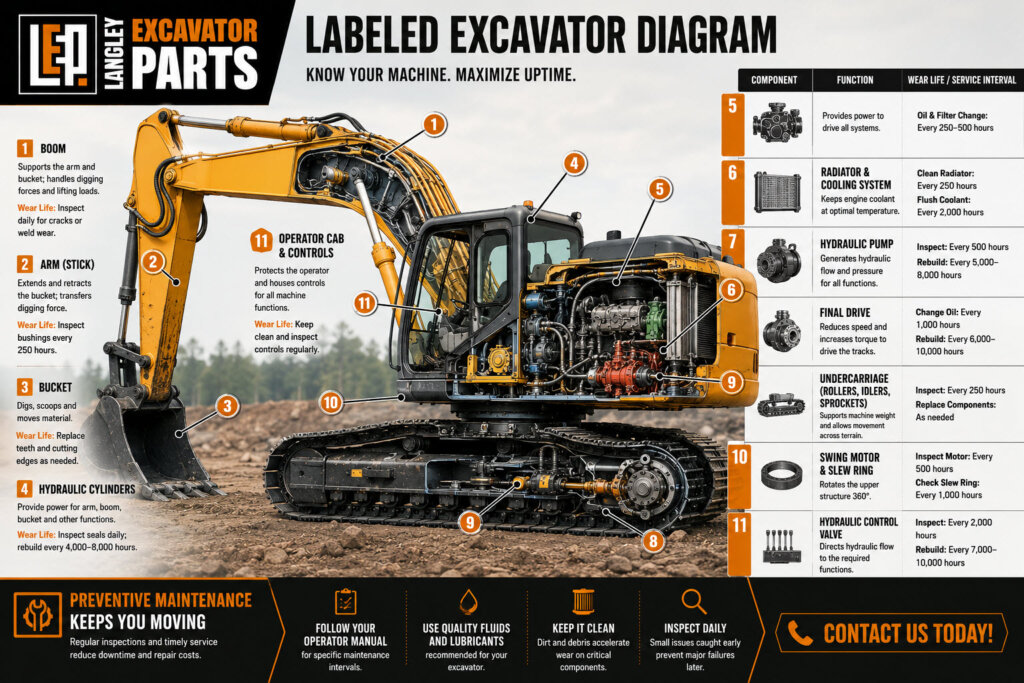
Every excavator is a carefully engineered system made up of interconnected components. Understanding what each part does and what signs indicate trouble is the first step toward keeping your machine in peak working condition.
1. The Hydraulic System
The hydraulic system is the central nervous system of any excavator. It converts mechanical energy from the engine into hydraulic pressure, which is then used to actuate cylinders, motors, and valves throughout the machine. Without a properly functioning hydraulic system, nothing moves.
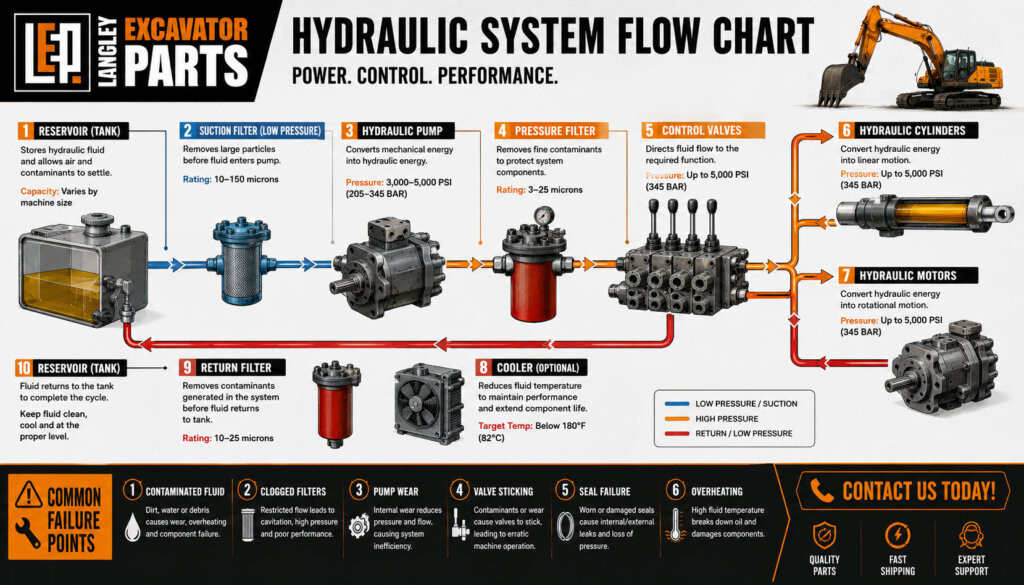
Common problems include internal hose wear, pump degradation, oil contamination, and seal failures. Warning signs include sluggish or jerky movements, unusual whining or grinding noises, visible fluid leaks, and a loss of lifting or digging force. Poorly sourced or incompatible hydraulic components can trigger widespread failures across multiple systems simultaneously.
2. The Boom
The boom is the large structural arm attached directly to the upper body of the excavator. It serves as the primary lifting and positioning element, raising and lowering the entire arm-and-bucket assembly. Booms are subjected to enormous bending forces and repetitive stress cycles throughout their working life.
Wear in the boom manifests as pin and bushing deterioration, hydraulic cylinder seepage, and in extreme cases, structural fatigue or cracking. If the boom drifts downward under load or lacks its normal lifting power, it’s time to inspect the cylinders, pins, and seals.
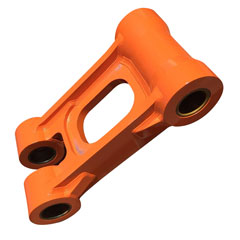
3. The Arm (Stick)
The arm, also referred to as the stick, connects the boom to the bucket. It controls the depth and reach of the digging action, allowing operators to adjust how far out and how deep the bucket penetrates. Like the boom, the arm endures constant compressive and tensile forces.
Worn bushings, stick curl issues, and hydraulic cylinder leaks are the most common problems. An arm that won’t hold position under load or that drifts unexpectedly is a clear sign that replacement excavator parts are needed.
4. The Bucket
The bucket is the excavator’s primary work tool, designed to penetrate, scoop, and carry soil, rock, debris, and other materials. Bucket teeth, cutting edges, and side cutters are high-wear items that need regular inspection and replacement to maintain digging efficiency.
Signs of bucket wear include poor soil penetration, material spillage from the sides or bottom, and visible damage to structural welds. Using incorrect or substandard bucket components not only reduces productivity but can also place additional stress on the arm and boom structures.
5. Tracks and Undercarriage
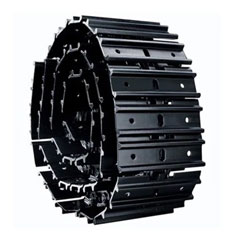
The undercarriage is the foundation that supports the entire weight of the machine and enables it to travel across job sites. It includes track chains, track shoes, rollers (both top and bottom), idlers, and sprockets. The undercarriage typically accounts for a significant share of total excavator maintenance costs.
Worn track shoes reduce traction and stability. Deteriorated rollers and idlers create excessive vibration and accelerate wear on adjacent components. If you notice track sagging, unusual vibration during travel, or frequent track derailment, undercarriage inspection and replacement should be a priority.
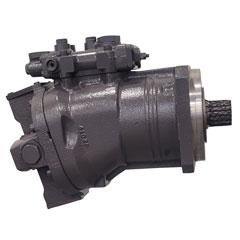
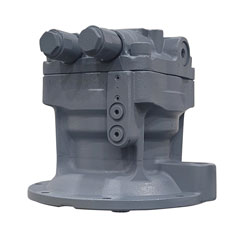
6. The Swing Motor
The swing motor is what allows the upper structure of the excavator to rotate a full 360 degrees relative to the undercarriage. This rotational capability is what makes excavators so productive; operators can dig in one location and swing to deposit material without repositioning the machine.
Swing motor issues typically involve bearing wear, internal seal failures, or hydraulic leakage. Sluggish or jerky rotation, unusual noise during swing, or noticeable slippage under load are all warning signs that the motor or related components need attention.
7. Final Drives
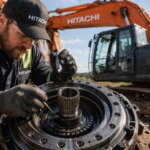
Final drives transmit the rotational force from the travel motors to the track sprockets, propelling the machine forward and backward. They are essentially the gearboxes of the travel system, and they operate in some of the harshest conditions on the machine (close to the ground and constantly exposed to mud, debris, and abrasion).
Oil leaks around the final drive housing, sluggish travel, unusual grinding noises, or excessive heat are all indicators of final drive problems. Ignoring these symptoms can lead to complete drive failure, resulting in a machine that cannot move under its own power.
8. The Engine
The diesel engine is the primary power source for the entire excavator. It drives the hydraulic pumps that power every moving function of the machine. Engine performance directly affects hydraulic output, fuel economy, and the machine’s overall productivity.
Air filter contamination, fuel system issues, cooling failures, and worn injectors are among the most common engine-related problems. Visible black or white exhaust smoke, hard starting, increased fuel consumption, and a loss of power are all signs that engine service or component replacement is overdue.
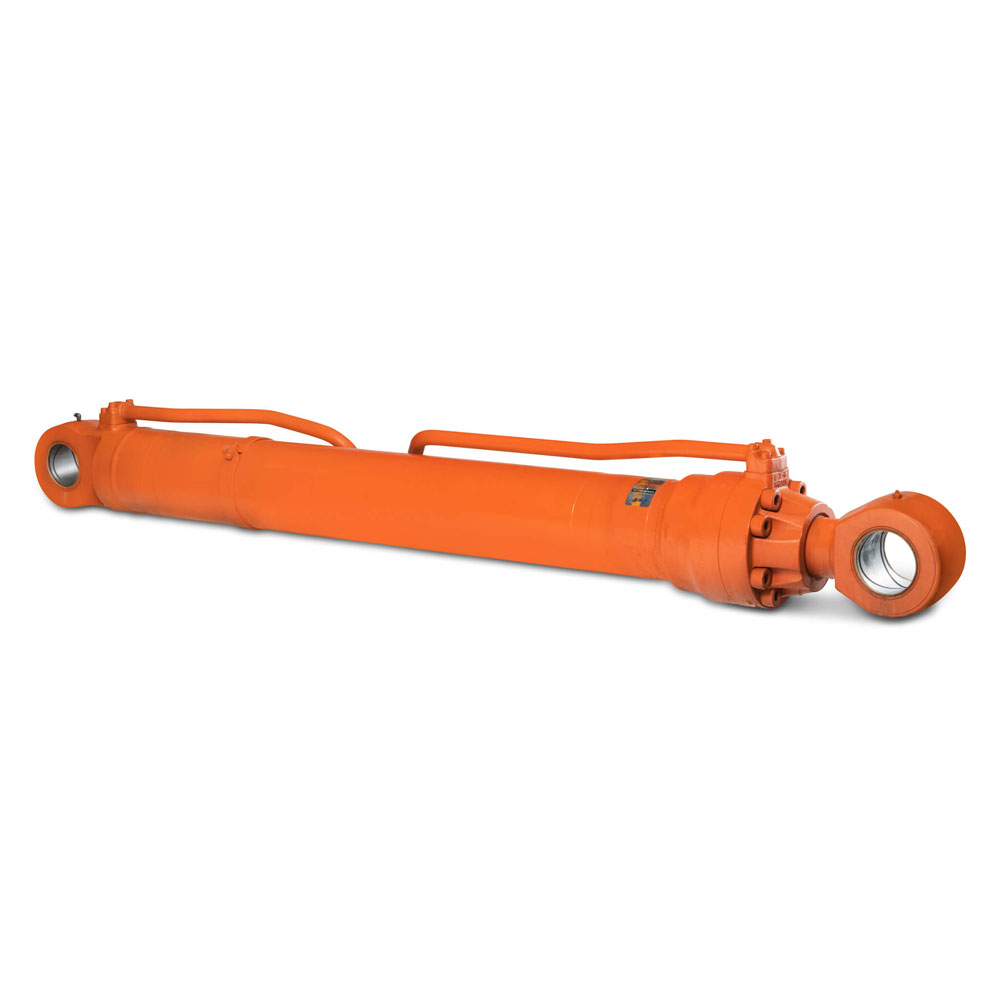
9. Hydraulic Cylinders
Hydraulic cylinders are the actuators that physically move the boom, arm, and bucket in response to hydraulic pressure. Each cylinder contains a piston, rod, seals, and end caps — all of which experience significant wear over time.
Seal failures are the most common cylinder problem, resulting in visible oil leaks and a loss of holding force. A cylinder that drifts under load, moves inconsistently, or shows external oil weeping needs immediate attention. Continuing to operate with compromised cylinders places additional strain on the hydraulic pump and control valves.
10. Control Valves
Control valves regulate the flow and direction of hydraulic fluid throughout the machine. They receive signals from the operator’s joysticks and pedals and respond by routing fluid precisely where it’s needed. Valve performance directly determines how smoothly and accurately an operator can control the machine.
Worn valve spools, internal leakage, and sticking can cause erratic machine movements, unresponsive controls, or a machine that refuses to hold position. Quality excavator parts are especially important here — a poorly manufactured control valve can render an otherwise healthy machine extremely difficult or dangerous to operate.
11. Cab Controls
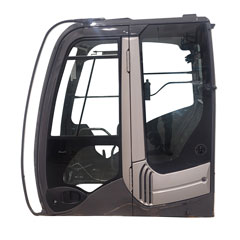
The operator’s cab is the command center of the excavator. Joysticks, foot pedals, multi-function switches, and electronic display systems give the operator precise control over all machine functions. The quality and condition of these controls directly affects operator productivity and safety.
Common cab control issues include worn joystick linkages, sticky or unresponsive foot pedals, and failing switches or sensors. When cab controls behave unpredictably, operator fatigue increases and the risk of accidents rises. Regular inspection of control inputs is an important but sometimes overlooked part of excavator maintenance.
12. The Cooling System
The cooling system manages heat levels in both the engine and the hydraulic system. It typically consists of a radiator, hydraulic oil cooler, intercooler, fan, thermostat, hoses, and coolant reservoir. Maintaining proper operating temperatures is critical for both performance and component longevity.
A clogged radiator, failed thermostat, or deteriorated coolant hose can cause the machine to overheat rapidly, potentially causing severe and expensive engine damage. Operating temperature warning lights should never be ignored. In hot climates or demanding duty cycles, cooling system maintenance becomes even more critical.
13. The Electrical System
Modern excavators rely on sophisticated electrical and electronic systems for engine management, hydraulic control, monitoring, diagnostics, and operator safety features. Sensors, wiring harnesses, control modules, and batteries all play essential roles in keeping the machine operating correctly.
Electrical issues are often challenging to diagnose but can cause significant disruption. Corroded connections, chafed wiring, and failed sensors can trigger warning lights, cause intermittent shutdowns, or disable safety systems. Using proper, compatible replacement components is essential in the electrical system since incorrect parts can interfere with the machine’s ECU and lead to additional problems.
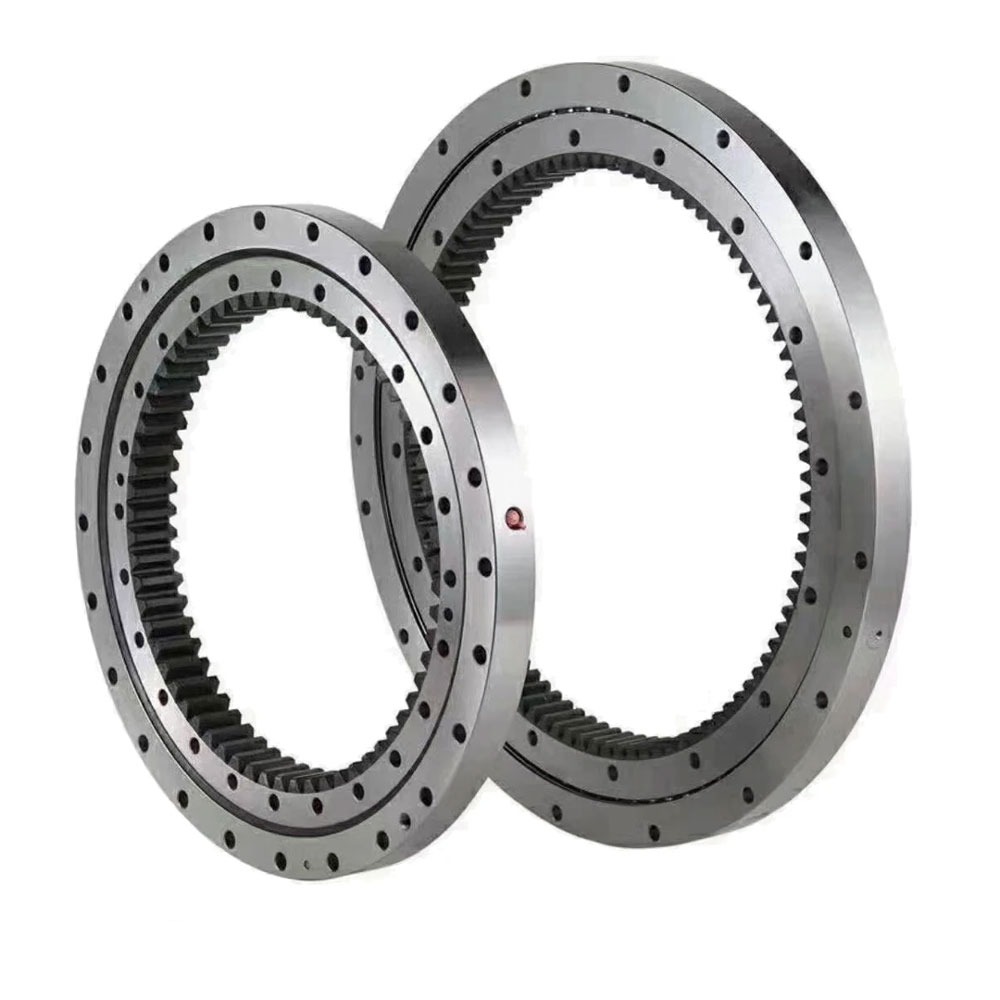
14. Slew Ring Bearings
The slew ring bearing, also known as the swing bearing or Rotec bearing, is the large rotational bearing that connects the excavator’s upper structure to the undercarriage. It supports the entire weight of the upper assembly while allowing smooth 360-degree rotation during digging, lifting, and material placement operations.
Because the slew ring bearing carries massive axial and radial loads, it is constantly exposed to stress, shock loading, dirt contamination, and inadequate lubrication risks. Over time, improper greasing or excessive wear can lead to looseness, abnormal movement, and even structural instability.
Common warning signs include unusual grinding or popping noises during rotation, excessive play between the upper structure and undercarriage, uneven swing movement, and visible grease contamination around the bearing seal area. If ignored, slew ring bearing failure can create severe safety hazards and expensive secondary damage to the swing drive system.
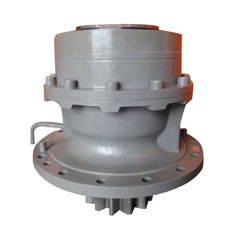
15. Swing Gear Box
The swing gear box works together with the swing motor to control the excavator’s rotational movement. It transfers hydraulic motor power into controlled rotational torque, allowing the machine to swing smoothly and precisely while handling heavy loads.
Inside the swing gear box are gears, bearings, seals, and lubrication components that experience continuous stress during operation. Contaminated oil, inadequate lubrication, and excessive shock loading are among the leading causes of gearbox wear and failure.
Operators may notice symptoms such as jerky swing motion, loud grinding noises, excessive backlash during rotation, oil leakage around the gearbox housing, or reduced swing power. Routine oil inspections and timely servicing are critical for preventing catastrophic gear damage and minimizing downtime.
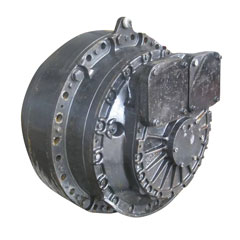
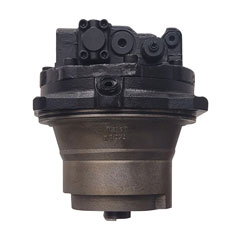
16. Travel Motor
The travel motor is responsible for powering the excavator’s movement across the job site. Mounted near the final drives, travel motors convert hydraulic pressure into rotational force that propels the tracks forward and backward.
Travel motors operate in extremely demanding environments where they are exposed to mud, debris, moisture, and constant vibration. Internal wear, hydraulic contamination, seal failures, and overheating are among the most common causes of travel motor problems.
Signs of travel motor issues include weak or uneven travel speed, loss of power when climbing grades, abnormal noises during movement, overheating, or hydraulic oil leakage near the drive assembly. Prompt inspection and replacement of worn travel motor components can prevent complete mobility failure and costly repairs.
Excavator Component Reference Table
Use this quick-reference table to identify key components, their common failure modes, and warning signs to watch for:
| Excavator Part | Main Function | Common Problems | Warning Signs | Replacement Importance |
|---|---|---|---|---|
| Hydraulic System | Powers all movement via pressurized fluid | Hose leaks, pump wear, fluid contamination | Slow/jerky movement, unusual noises | Critical — powers entire machine |
| Boom | Lifts and positions the arm assembly | Pin wear, cylinder leaks, structural cracks | Drooping, poor lifting power | High — affects all digging operations |
| Arm / Stick | Extends reach and depth of bucket | Bushing wear, stick curl issues | Inability to hold position under load | High — core digging component |
| Bucket | Excavates, digs, and carries material | Tooth wear, cutting edge damage, cracks | Poor penetration, material spillage | High — direct work tool |
| Undercarriage | Supports and propels the machine | Track shoe wear, roller damage, idler wear | Unusual vibration, track slip or derailment | Critical — machine mobility |
| Swing Motor | Rotates upper structure 360° | Seal failure, bearing wear, internal leaks | Slow or jerky rotation | High — affects productivity |
| Final Drives | Transmits power to tracks from motor | Seal leaks, gear wear, hub damage | Oil leaks at drives, sluggish travel | Critical — machine movement |
| Engine | Primary power source for all systems | Air filter clogging, fuel system issues | Hard starting, black smoke, power loss | Critical — machine operation |
| Hydraulic Cylinders | Actuate boom, arm, and bucket movement | Seal wear, rod scoring, piston damage | Drifting, slow movement, visible leaks | High — precision control |
| Control Valves | Direct hydraulic flow to each circuit | Internal leakage, spool wear, sticking | Unresponsive controls, erratic movement | High — machine control |
| Cab Controls | Operator interface for machine functions | Joystick wear, pedal issues, switch failure | Stiff controls, unresponsive inputs | Moderate to High — operator safety |
| Cooling System | Regulates engine/hydraulic temperatures | Radiator clogging, hose wear, fan issues | Overheating warning lights, fluid loss | High — prevents engine damage |
| Electrical System | Powers sensors, controls, and lighting | Corrosion, wiring chafing, sensor failure | Warning lights, intermittent shutdowns | Moderate to High — system reliability |
| Slew Ring Bearings | Supports upper structure rotation | Bearing wear, inadequate lubrication, seal failure | Grinding noises, excessive rotational play, uneven swing | Critical — structural stability and safe operation |
| Swing Gear Box | Transfers rotational power for swing movement | Gear wear, oil contamination, seal leaks | Jerky swing motion, grinding noise, oil leakage | High — rotational performance and control |
| Travel Motor | Powers track movement and machine travel | Hydraulic leakage, overheating, internal wear | Weak travel power, uneven movement, abnormal noise | Critical — machine mobility and productivity |
| Need excavator replacement parts? Contact Langley Excavator Parts Inc. today, your trusted source for OEM, rebuilt, and refurbished excavator parts for Hitachi, John Deere, Caterpillar, Volvo, Link-Belt, and more. |
Why Using the Right Replacement Parts Matters
The decision to use quality excavator parts versus low-cost alternatives has far-reaching consequences that go well beyond the initial price tag. Here’s why it matters so much:
Safety Risks from Worn or Incorrect Components
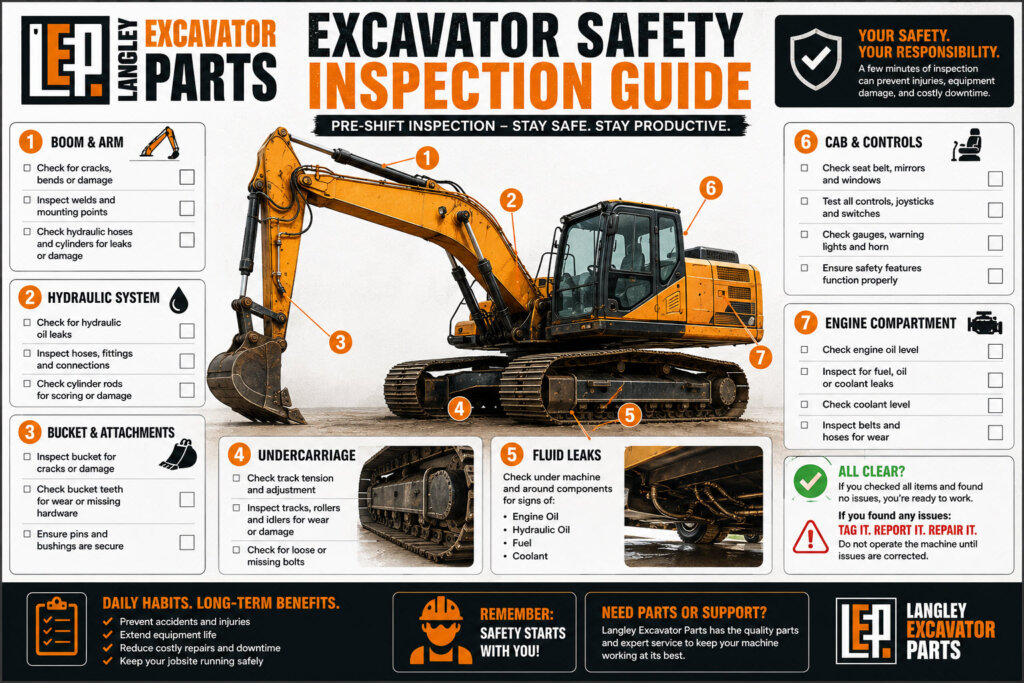
An excavator can weigh anywhere from 5 to over 100 tonnes. When a critical component like a hydraulic cylinder seal, a final drive, or a boom pin fails unexpectedly, the result can be catastrophic, both for the machine and for the people working nearby. Using improperly sized or substandard parts increases the risk of sudden failure.
Downtime and Lost Productivity
Every hour your excavator sits idle costs money. A single component failure can sideline a machine for days while replacement parts are sourced, especially if the wrong part was installed initially and caused secondary damage. Investing in genuine excavator parts upfront significantly reduces the likelihood of unplanned downtime.
Reduced Fuel Efficiency
Worn or improperly fitted components force the engine and hydraulic system to work harder to achieve the same result. This translates directly into higher fuel consumption, which is a cost that accumulates quickly across long operating hours.
Damage Caused by Incompatible Components
Excavator systems are tightly engineered. A hydraulic hose with incorrect pressure rating, a seal with the wrong durometer, or a track roller with slightly off dimensions can cause rapid wear on adjacent parts. The cost of the incompatible part is typically dwarfed by the cost of the damage it causes.
The Value of OEM Excavator Parts
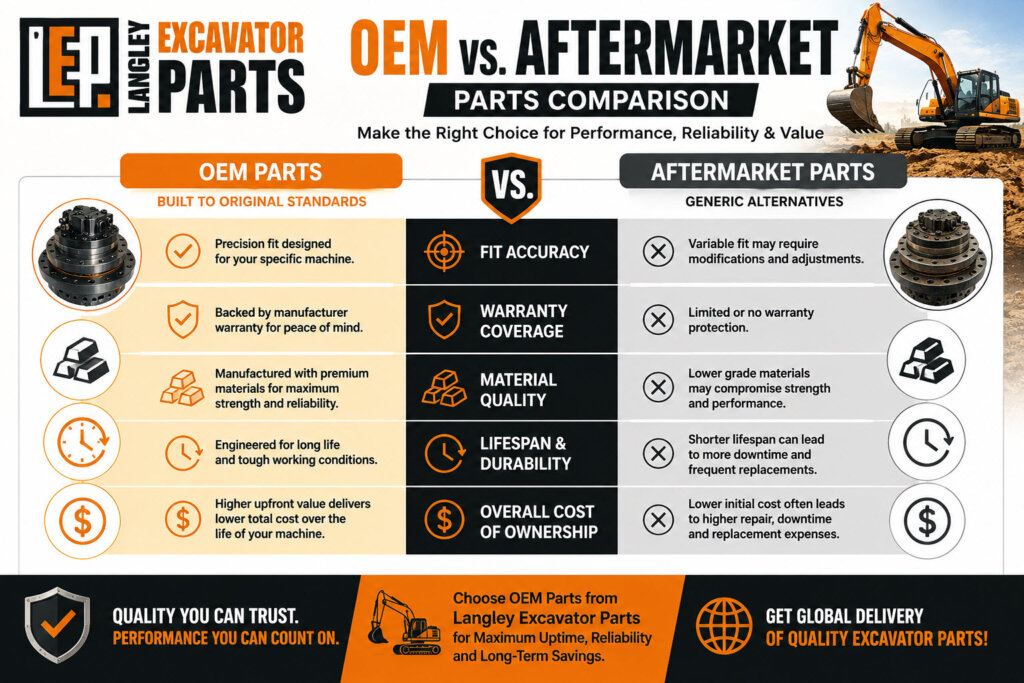
OEM (Original Equipment Manufacturer) excavator parts are produced to the exact specifications of the original component. They offer precise fit, validated material quality, and manufacturer-backed reliability. For machines operating in demanding conditions, OEM parts deliver the best assurance of performance and longevity.
Rebuilt and Refurbished Excavator Parts: A Smart Alternative
When OEM new parts fall outside a budget or timeline, rebuilt excavator parts and refurbished excavator parts from a trusted supplier represent an excellent middle ground. A quality-rebuilt final drive or swing motor, for example, is often reconditioned to meet OEM tolerances using genuine components, providing performance close to new at a reduced cost. The key is sourcing these components from suppliers with verified rebuild standards.
Excavator Brand Parts Support: What You Need to Know
Hitachi Excavator Parts
Hitachi excavators are widely respected for their durability, refined hydraulic performance, and operator comfort. Hitachi machines are found across mining, infrastructure, and urban construction applications globally. Common replacement components include hydraulic pump assemblies, swing motor seals, final drive units, undercarriage components such as rollers and idlers, and cab control parts.
Quality matters particularly in Hitachi’s hydraulic system, which operates at high pressure and is sensitive to contamination and off-spec parts. Sourcing genuine Hitachi excavator parts or verified equivalents ensures the hydraulic system continues to deliver the precise, powerful performance the brand is known for.
John Deere Excavator Parts
John Deere excavators are popular across North America for their reliability, dealer support, and integration with John Deere’s fleet management systems. Common service items include engine filters and service kits, hydraulic hoses and cylinders, undercarriage components, and electrical sensors.
Because John Deere machines are frequently used in agricultural and construction environments where conditions can vary dramatically, using John Deere excavator parts that meet OEM specifications is particularly important for maintaining warranty conditions and ensuring the machine performs as designed across varying duty cycles.
Caterpillar Excavator Parts
Caterpillar (CAT) is one of the most recognized names in heavy equipment worldwide. CAT excavators are engineered for demanding applications and feature sophisticated electronic management systems. Common replacement needs include undercarriage components (CAT track groups wear quickly in abrasive conditions), hydraulic cylinder rebuild kits, final drive assemblies, and engine components.
Caterpillar machines are particularly sensitive to the use of non-compatible hydraulic fluids and filter specifications. Using genuine Caterpillar excavator parts, especially in the hydraulic and engine systems, preserves performance, protects warranty coverage where applicable, and maintains resale value.
Volvo Excavator Parts
Volvo excavators are known for their fuel efficiency, advanced cab ergonomics, and robust hydraulic systems. Volvo’s emphasis on sustainability and operator comfort makes their machines popular in European-influenced markets and with operators prioritizing efficiency. Common replacement components include hydraulic pump and motor components, swing bearing and gear sets, undercarriage parts, and electronic control modules.
Volvo’s hydraulic architecture is distinctive, and Volvo excavator parts are engineered to operate within those specific parameters. Substituting non-compatible components can affect the precision of the load-sensing hydraulic system and reduce the fuel savings the machine is designed to deliver.
Link-Belt Excavator Parts
Link-Belt excavators have earned a strong following in North American markets, particularly in the utility, pipeline, and general construction sectors. Known for operator-friendly controls and solid structural engineering, Link-Belt machines are dependable workhorses across a wide range of applications.
Common Link-Belt replacement components include upper and lower frame wear components, hydraulic cylinder seals and rods, undercarriage parts, and cab control components. As with all equipment, sourcing Link-Belt excavator parts from knowledgeable suppliers ensures compatibility and avoids the fitment issues that can arise with generic alternatives.
Why Choose Langley Excavator Parts Inc.?
When your excavator needs attention, you need a parts supplier who understands the urgency, knows the machines, and can deliver the right component without delay. That’s exactly what Langley Excavator Parts Inc. can provide. For over 40 years, we have been a trusted name in the excavator parts industry, serving construction companies, mining operations, and forestry contractors across Canada. Founded in 1977 on the principles of honesty, integrity, and technical excellence, we have grown from a regional equipment firm into one of North America’s leading suppliers of factory-compatible excavator components.
Deep Industry Knowledge
Our team brings hands-on experience with heavy equipment to every customer interaction. We understand the difference between a Hitachi final drive and a Caterpillar equivalent, and we know which components are most likely to fail under specific operating conditions. That expertise helps us guide you to the right part the first time.
Broad Inventory Access
We maintain access to a wide range of new OEM excavator parts, rebuilt excavator parts, and refurbished excavator parts. Whether you need a standard service item or a hard-to-locate component for an older machine, we have the sourcing connections to find what you need.
Multi-Brand Support
We support excavator owners working with Hitachi, John Deere, Caterpillar, Volvo, Link-Belt, and many other major brands. No matter which machine you’re operating, we can help you find compatible, high-quality excavator replacement parts.
Minimizing Your Downtime
We know that time is money in the construction industry. Our team works with urgency to identify, source, and deliver the parts you need as quickly as possible, helping you get your machine back in service and your project back on track.
Honest, Customer-Focused Service
We don’t push unnecessary upsells or unsuitable alternatives. Our goal is to provide the right part at a fair price, with the expert guidance you need to make an informed decision. We build long-term relationships with our customers by delivering consistent value and reliable support.
Frequently Asked Questions (FAQ)
What are OEM excavator parts, and why are they preferred?
OEM (Original Equipment Manufacturer) parts are produced to the exact specifications set by the excavator’s manufacturer. They offer the highest assurance of fit, material quality, and performance. Many operators and fleet managers prefer OEM parts because they minimize risk, maintain warranty coverage where applicable, and provide predictable service life.
Are rebuilt excavator parts reliable?
Yes, when sourced from a reputable supplier. Quality-rebuilt components such as final drives, swing motors, and hydraulic pumps are typically disassembled, inspected, and reconditioned to OEM tolerances. They represent an excellent value alternative when new OEM parts are not available or exceed the budget, provided they come with a clear warranty and documentation of the rebuild process.
How often should I replace excavator undercarriage components?
Undercarriage wear rates vary significantly depending on operating conditions, soil type, and travel distances. As a general guideline, undercarriage components should be inspected every 250–500 operating hours. In highly abrasive conditions such as rock or gravel, more frequent inspection is advisable. Keeping track tension properly set also extends undercarriage life considerably.
What are the most common signs that excavator hydraulic system components need replacement?
Key warning signs include slow or jerky machine movements, visible hydraulic fluid leaks, unusual whining or cavitation noise from the pump, increased cycle times, and a loss of lifting or digging force. Any of these symptoms warrant immediate inspection of hydraulic filters, hoses, seals, and pump condition.
Can I use parts from one excavator brand on a different brand’s machine?
In most cases, mixing components across brands is not recommended without expert verification. While some components may appear similar, differences in pressure ratings, dimensional tolerances, and material specifications can cause premature failure or incompatibility with the machine’s electronic management systems. Always consult with a knowledgeable parts specialist before cross-referencing components.
How can I tell if my excavator’s final drives need replacement?
Oil leaks around the final drive housing, sluggish or uneven travel speed, grinding or growling noises during machine movement, and excessive heat at the drive units are all indicators of final drive issues. Early intervention, typically with a seal replacement or rebuild, can prevent a far more expensive full replacement.
What maintenance steps can extend the life of excavator components?
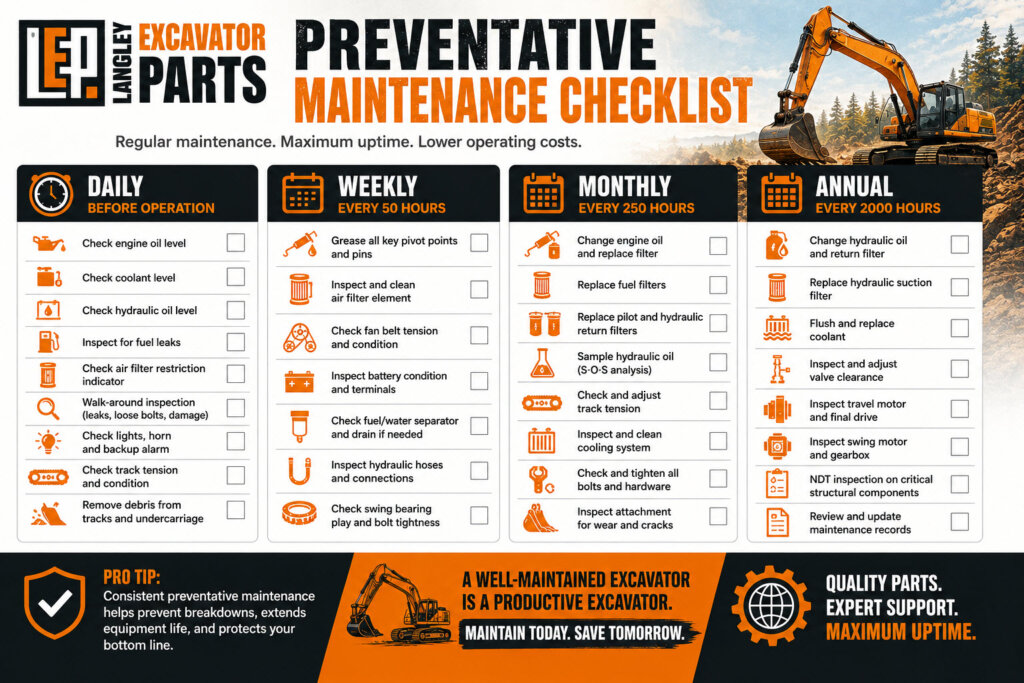
Regular greasing of all pins and bushings, maintaining correct hydraulic fluid levels and cleanliness, replacing filters on schedule, keeping the cooling system clean and functional, inspecting and adjusting track tension, and conducting pre-shift walkaround inspections are among the most impactful maintenance habits. Following the manufacturer’s service manual is the single best guide to component longevity.
Is it safe to operate an excavator with a known component issue until the part arrives?
This depends entirely on the nature and severity of the issue. A minor oil seepage may be monitored closely over a short period, while a failed swing motor bearing, a compromised boom cylinder, or an unreliable electrical system represents an immediate safety risk that should ground the machine until repaired. When in doubt, prioritize safety over productivity and consult your equipment service team.
| Ready to get your excavator back to full performance? Don’t let a worn component slow your project down. Visit us online or reach out directly at +1 (888) 284-4313 (Toll Free). Our team is standing by to help! |